Explainer
Warmth on tap: saturation explained
What saturation actually does, why digital mixes love it, and where to add it without turning everything to mud.
SoftKrtl Editorial · 28 May 2026 · 5 min read
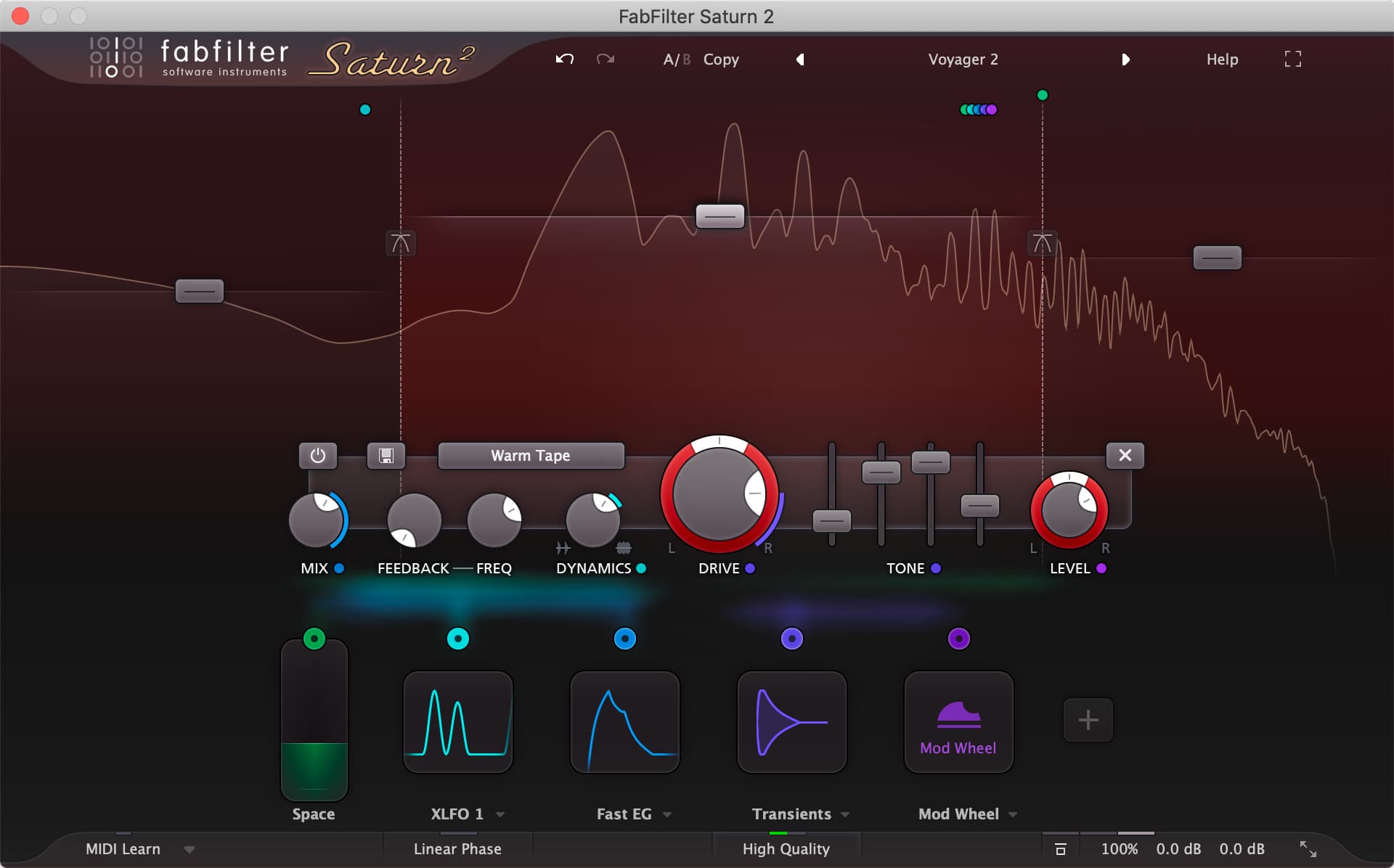
Saturation is the sound of something being pushed a little harder than it wants to be. Tape, tubes and transformers all add harmonics and gently round off peaks, and that combination is a big part of why analogue recordings feel rich and cohesive.
Why reach for it
In a digital mix, saturation adds density and glue that clean gain never will. A touch on individual tracks helps them cut through, and a whisper across the mix bus can tie a whole arrangement together. The harmonics it generates also help small speakers imply low end they cannot physically produce.
How much is too much
Saturation is easy to overdo. Because it builds up gradually, ears adjust and you keep pushing. Set it while comparing against the bypassed sound at matched loudness, and back off until you only miss it when it is gone. Used with restraint, it is one of the fastest ways to make a mix feel finished.